
Holistic Dietary Strategies for Men's Well-being
Explore evidence-based nutritional principles, the roles of essential micronutrients, and balanced dietary patterns that contribute to overall health. All content is purely informational.

Understanding Macronutrients
Macronutrients are the three primary categories of nutrients that provide the body with energy: carbohydrates, proteins, and fats. Each plays a distinct and essential role in supporting overall physiological functions.
Carbohydrates serve as the body's primary energy source, fuelling daily activity, cognitive function, and cellular processes. Whole grain sources provide sustained energy alongside dietary fibre.
Proteins are composed of amino acids and support tissue structure, enzyme production, and immune function. Diverse sources include legumes, lean meats, fish, eggs, and dairy.
Fats, particularly unsaturated varieties found in nuts, seeds, avocados, and fatty fish, support cellular membrane integrity, fat-soluble vitamin absorption, and various metabolic processes.
- Complex Carbohydrates
- Lean Proteins
- Unsaturated Fats
- Amino Acids

Key Vitamins for Men's Health
Vitamins are organic compounds required in small amounts for normal physiological function. Several vitamins are of particular relevance to men's general nutritional needs.
Vitamin D
Supports calcium absorption, bone density maintenance, and normal immune function. Principal source is sunlight exposure; dietary sources include fatty fish and fortified foods.
B-Complex Vitamins
A group of eight water-soluble vitamins including B1, B2, B6, B9, and B12, collectively supporting energy metabolism, nervous system function, and red blood cell formation.
Vitamin C
An antioxidant vitamin that contributes to collagen synthesis, immune defence, and the absorption of non-haem iron from plant-based foods.
Vitamin K
Plays a role in blood coagulation and bone mineralisation. Found in green leafy vegetables, fermented foods, and some dairy products.
Vital Minerals for Male Well-being
Minerals are inorganic elements essential for numerous bodily functions, including structural roles in bones and teeth as well as regulatory functions in fluid balance and enzymatic activity.
| Mineral | General Function | Dietary Sources |
|---|---|---|
| Zinc | Supports normal immune function, protein synthesis, and cell division | Oysters, red meat, legumes, pumpkin seeds |
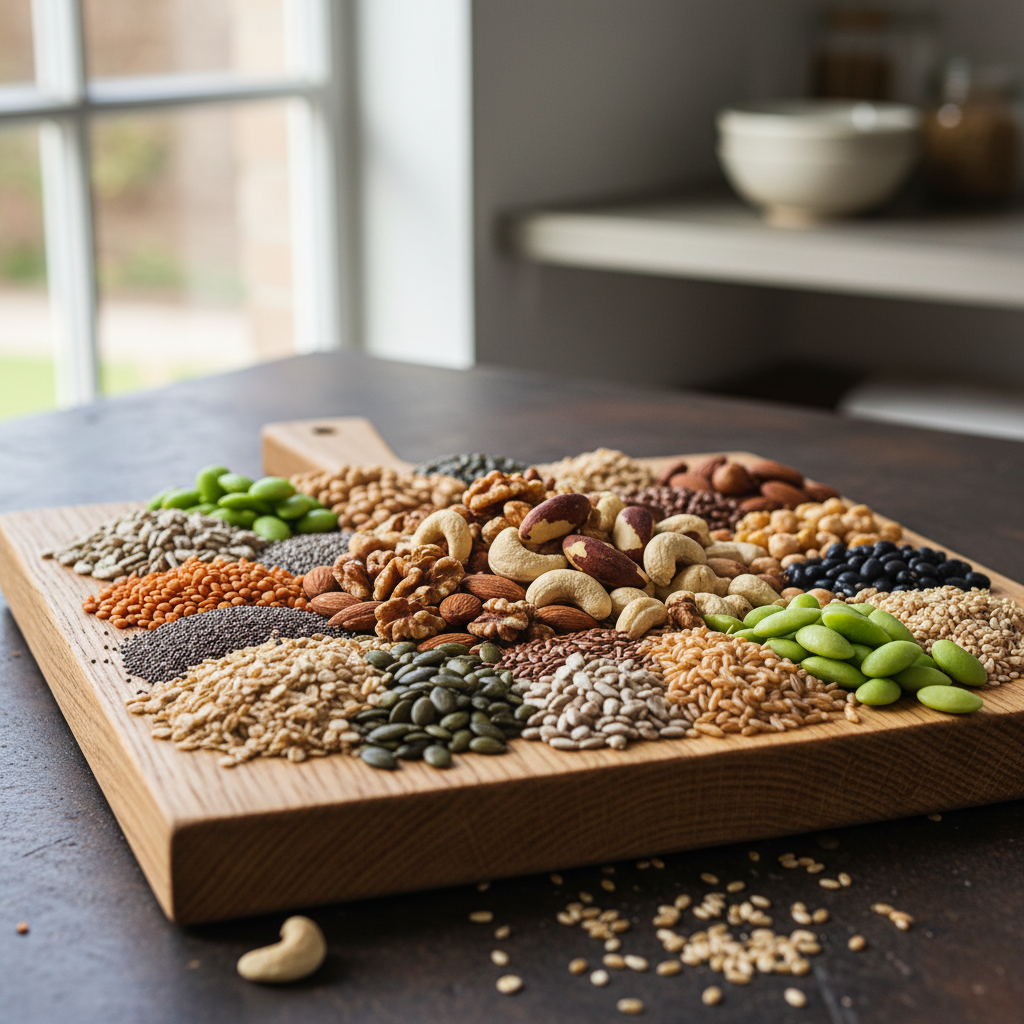
| Magnesium | Involved in over 300 enzymatic reactions, muscle function, and energy production | Leafy greens, nuts, seeds, whole grains |
| Selenium | Antioxidant properties; supports thyroid function and immune response | Brazil nuts, seafood, poultry, eggs |
| Iron | Essential for oxygen transport via haemoglobin and energy metabolism | Red meat, legumes, spinach, fortified cereals |

Antioxidants and Their Dietary Sources
Antioxidants are compounds that neutralise free radicals – unstable molecules that can cause oxidative stress in the body. A diet rich in antioxidants from whole food sources contributes to general cellular health.
Common dietary antioxidants include Vitamin C, Vitamin E, beta-carotene, and polyphenols such as flavonoids and lycopene. These are found abundantly in a variety of plant-based foods.
Key Antioxidant-Rich Foods
- Berries (blueberries, raspberries, strawberries) – high in anthocyanins and Vitamin C
- Dark leafy greens (spinach, kale) – sources of beta-carotene and Vitamin E
- Tomatoes – a notable source of lycopene, a carotenoid antioxidant
- Nuts and seeds – provide Vitamin E and selenium
- Green tea – contains catechin polyphenols
- Dark chocolate (high cocoa content) – contains flavanols
Hydration: A Foundation for Health
Adequate hydration is fundamental to virtually every physiological process. Water regulates body temperature, transports nutrients, facilitates digestion, and supports kidney function.
General guidance from nutrition organisations suggests approximately 2–2.5 litres of fluid intake per day for adult men, though individual requirements vary based on activity level, climate, and overall health status.
Hydrating Beverages to Consider
- Plain water – the primary and most beneficial source
- Herbal teas – caffeine-free options offering additional plant compounds
- Diluted fruit juice – provides hydration alongside some micronutrients
- Broths and soups – contribute to fluid intake alongside minerals

Balanced Meal Planning Principles
Balanced meal planning is the practice of constructing meals that provide an appropriate distribution of macronutrients, vitamins, minerals, and dietary fibre from diverse food sources.
- Include all food groups: Aim for a combination of whole grains, lean proteins, vegetables, fruits, and healthy fats at each primary meal.
- Prioritise colour variety: Different coloured plant foods indicate diverse phytonutrient profiles, ensuring a broader range of micronutrients.
- Manage portion awareness: Being mindful of portion sizes supports appropriate energy balance without strict calorie restriction.
- Plan for regularity: Consistent meal timing supports stable energy levels and digestive regularity throughout the day.
- Allow flexibility: A sustainable dietary approach accommodates occasional variation and cultural food practices.

The Importance of Whole Foods
Whole foods are minimally processed foods that retain their natural nutritional composition. Compared to heavily processed alternatives, whole foods generally provide greater micronutrient density alongside beneficial compounds such as dietary fibre and phytonutrients.
Research in nutritional science consistently highlights that dietary patterns emphasising whole foods – including vegetables, fruits, legumes, whole grains, and unprocessed proteins – are associated with better overall nutritional status.
The concept of food processing exists on a spectrum. Minimally processed foods such as frozen vegetables, canned legumes, or plain yoghurt retain the majority of their nutritional value and represent practical, accessible choices within a balanced diet.
Dietary Fiber: Benefits and Sources
Dietary fibre is a form of complex carbohydrate found exclusively in plant-based foods that the human body cannot fully digest. It exists in two primary forms – soluble and insoluble – each with distinct physiological roles.
Soluble fibre, found in oats, apples, legumes, and flaxseeds, dissolves in water to form a gel-like substance, supporting digestive regularity and contributing to feelings of satiety.
Insoluble fibre, found in whole wheat, bran, and many vegetables, adds bulk to stool and supports healthy intestinal transit.
- Oats and Oat Bran
- Lentils and Beans
- Whole Wheat
- Apples and Pears
- Broccoli
- Chia Seeds
Mindful Eating Practices
Mindful eating is a practice rooted in mindfulness principles, applied to the experience of consuming food. It involves bringing deliberate, non-judgmental awareness to the sensory experience of eating – the taste, texture, smell, and satiety cues of food.
The concept, studied within behavioural nutrition research, suggests that slowing down, reducing distractions during meals, and paying attention to internal hunger signals may support more considered dietary choices over time.
- Eating without screens or distracting stimuli
- Chewing food thoroughly and eating at a measured pace
- Recognising physical hunger signals before eating
- Acknowledging feelings of fullness and satisfaction
- Appreciating the flavours, textures, and origins of food

Seasonal Eating and Local Produce
Seasonal eating refers to the practice of consuming fruits and vegetables during their natural growing period. Locally sourced, in-season produce is typically harvested closer to the point of sale, which may preserve higher concentrations of heat-sensitive or light-sensitive nutrients.
In Switzerland, seasonal produce varies significantly across the year. Spring and summer bring abundant leafy greens, tomatoes, courgettes, and stone fruits, while autumn and winter offer root vegetables, squash, apples, and pears.
- Spring: Asparagus, Spinach
- Summer: Berries, Courgette
- Autumn: Pumpkin, Apples
- Winter: Root Vegetables, Cabbage

Understanding Food Labels
Food labels in Switzerland follow European Union nutritional labelling standards, displaying energy content in kilojoules and kilocalories, along with the amounts of fat, saturated fat, carbohydrates, sugars, protein, and salt per 100g or per serving.
Key Label Elements Explained
- Energy values: Reflect the total caloric contribution of the product per 100g
- Total fat / Saturated fat: Distinguishes overall fat content from less beneficial saturated types
- Carbohydrates / Sugars: Separates total carbohydrates from added or free sugars
- Dietary fibre: Indicates the amount of indigestible plant material
- Protein: Shows the protein content, useful for dietary balance
- Salt: Reflects sodium content expressed as salt equivalent

Lifestyle Factors for Holistic Health
Nutrition does not operate in isolation. General well-being is influenced by an interconnected set of lifestyle factors that complement dietary choices.
-
Physical ActivityRegular movement, whether structured exercise or everyday activity such as walking, cycling, or gardening, supports cardiovascular health, muscle maintenance, and general energy regulation.
-
Sleep QualityAdequate sleep, generally considered to be 7–9 hours per night for adults, supports metabolic function, immune regulation, and cognitive performance.
-
Stress ManagementChronic psychological stress may influence dietary behaviours and appetite regulation. Practices such as regular outdoor time, social connection, and relaxation techniques are widely discussed in well-being literature.
-
Social and Environmental FactorsFood choices are shaped by cultural context, social habits, food access, and environmental factors. Understanding these influences contributes to a more complete picture of nutritional behaviour.
Explore Nutritional Insights
Myraza is an independent educational resource dedicated to explaining nutritional principles for men's general well-being. All content is for informational purposes only.
Educational content only. No promises of outcomes.